
A construction claim is a project-delivery event. We resolve it like one.
The Project Neutral® Early Neutral Evaluation is a 21-day, mediation‑privileged written evaluation of a dispute in motion — the merits, the likely outcomes, and practical recommendations, delivered while the project keeps moving.
The facts don’t change. Only the parties’ exhaustion does.
Most large construction disputes settle years after completion, on facts that were knowable the day the dispute first appeared. The intervening years produce no new truth. They produce cost, delay, and ruined working relationships — while the claim is handled as a legal event, somewhere far from the project.
Every traditional path — litigation, arbitration, even mediation — arrives after the damage is done. The question is not whether your dispute will be resolved by negotiation. Nearly all are. The question is when, and with how much of the project already lost.
One senior evaluator. The whole record. Three weeks.
An Early Neutral Evaluation puts an independent senior construction professional — engineering-trained, contract-fluent, and answerable to neither party’s position — inside your dispute while it is still a project problem.
Independent, by design
The Neutral is engaged to evaluate, not to advocate. The evaluation examines each disputed issue on its merits against the contract and the project record — whichever way that cuts.
Technical rigor with a senior-executive viewpoint
Document review, schedule analysis, and interviews are conducted by a senior construction executive, not delegated downward. Where an issue turns on a specialized discipline, qualified independent technical specialists are integrated under the same confidentiality framework.
Advisory, non-binding — and useful precisely because of it
The evaluation is advisory. Nothing is waived, nothing is prejudiced, and no one is locked into an outcome. What the parties gain is an independent, executive-grade view of where they actually stand — the thing most disputes lack at the moment it matters.
The 21-day schedule
-
Day 0 — Engagement
The clock starts
The engagement letter is signed; the 21-day clock starts on first document receipt. Fixed fee, stated up front.
-
Days 1–7
Document assessment
Structured review of the contract, schedule, change-order file, and correspondence under the Methodology’s defined framework.
-
Days 8–14
Confidential interviews
Structured, privileged interviews with five to ten key project personnel — candid, because no individual statement is ever attributed.
-
Days 15–21
Evaluation and recommendations
Analysis, findings, and a written evaluation with practical recommendations — including draft change-order language where appropriate.
A written evaluation you can act on
- A merit assessment of each disputed issue against the contract and the project record
- A predicted range of outcomes in formal proceedings, with realistic cost and duration
- Specific, implementable commercial recommendations — not a number pulled from the air
- Draft change-order language, ready for negotiation and execution
- A framework for implementing what the parties agree to
The evaluation is confidential and prepared within the mediation-privilege framework: discussions confidential, work product privileged, individual statements never attributed — structured so nothing prejudices a later proceeding. Project Neutral® Inc. is not a law firm and does not provide legal advice; parties should consult counsel on privilege and admissibility questions in their jurisdiction.
Candor is what makes early settlement possible. Privilege is what makes candor safe.
Independence
The Neutral serves the resolution, not a side. Conflict checks precede every engagement, and the evaluation goes where the record goes.
The privilege framework
All communications operate within mediation-privilege and settlement-communication protections. A project manager can say “we could live with X” without arming the other side.
A fixed clock and a fixed fee
Twenty-one days, one fee, no hourly meter. The engagement’s economics run toward resolution — not away from it.
And if it doesn’t settle?
Then you hold an independent, executive-grade evaluation of your position — and you have waived nothing. The same Neutral can mediate a formal session already knowing the project, structure the negotiation, or support an orderly escalation. Many clients continue with ongoing dispute mitigation: the same Neutral, under the same privilege framework, on a cadence sized to the project. Ongoing engagement options
Nothing about the ENE is wasted work. It is the preparation every later proceeding wishes it had.
Where this method has worked
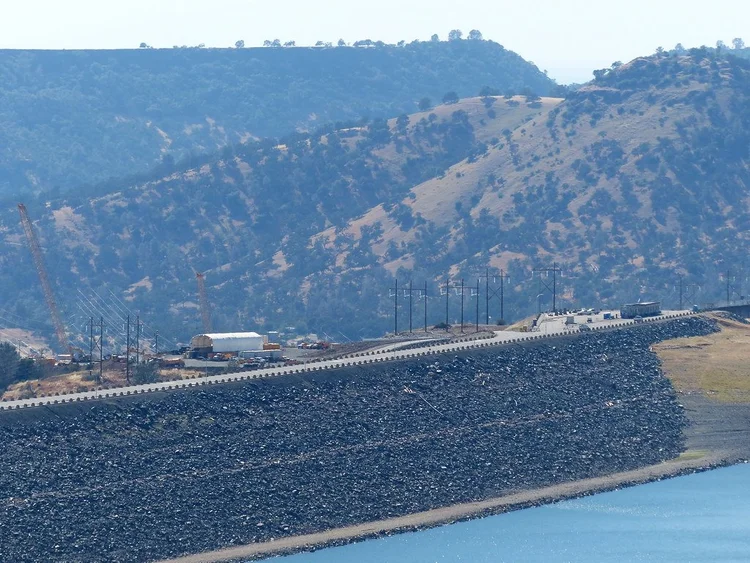
Oroville Dam Spillway Reconstruction
On the ~$1.1B emergency reconstruction, a safety-requirements dispute between DWR and its contractor was resolved through structured, privileged negotiation — no formal claims process, no schedule stall.
Read more →
Pure Water San Diego
Standing neutral roles across a multi-segment pipeline program, resolving disputes in real time with consistent contract interpretation.
Read more →Common questions
Is the evaluation binding?
No — deliberately. It is advisory and non-binding, prepared within the mediation-privilege framework. That is what lets both parties engage candidly, and it is why the evaluation so often becomes the basis of a negotiated resolution.
What does it cost?
A fixed fee, stated in the engagement letter — half on engagement, half on delivery. No hourly billing. The fee can be shared between parties.
What do you need from us to start?
A signed engagement letter and the project record — contract, schedule, change-order file, and correspondence. The 21-day clock starts on first document receipt.
Who performs the evaluation?
A senior construction executive — Project Neutral® Consultants are employees, not a referral network — supported where needed by qualified independent technical specialists under the same confidentiality framework. Our expertise
How does this interact with California’s SB 440?
For disputed change orders on private California projects, the statute now imposes a mandatory-mediation step on a defined clock. The ENE is built to fit that step — or to resolve the dispute before mediation is ever called. SB 440 and the ENE